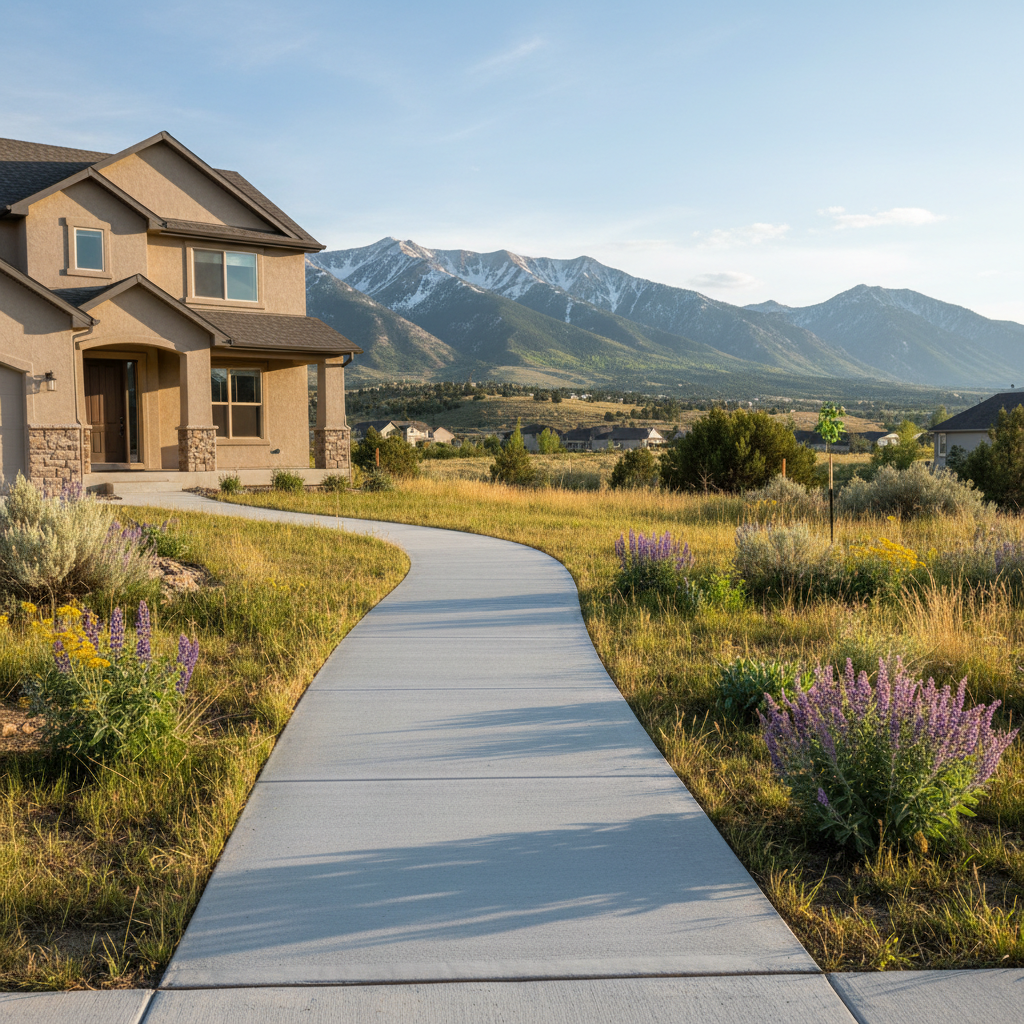
Your Sidewalk takes a beating all year long. Between the scorching summer heat we get right off the Wasatch Range and those brutal winter freezes, Concrete in Orem has to be tough. If you have noticed your front Walkway starting to crack, sink, or flake, timing is everything when it comes to getting Sidewalk Repair or Sidewalk Replacement fixed.
When to Schedule Your Sidewalk Project
Most people think concrete is a mid-summer job. Pouring fresh concrete when it is ninety degrees out in July can actually cause it to dry too fast, which leads to surface cracking. Late spring and early fall are prime windows around Orem. The temperatures are mild, the air is not sucking all the moisture out of the mix too quickly, and the concrete can cure properly.
Utah Valley Concrete looks closely at overnight lows before scheduling a pour. If the temperature dips below freezing before the concrete hits its initial strength, the slab will be ruined. That is why we dodge late fall and winter for new Sidewalk Installation unless we are using special blankets and additives.
How Orem Soil and Weather Affect Concrete
Down here in the valley, our soil has a lot of clay. Clay expands when it gets wet and shrinks when it dries out. That constant shifting creates empty pockets beneath your Sidewalks. Add in the freeze-thaw cycles we get every winter, where snow melts during the day, seeps into tiny cracks, and freezes solid at night, and your Sidewalk is under constant pressure.
- Water gets into microscopic pores.
- It expands by about nine percent when it turns to ice.
- The pressure pops the top surface right off, a process we call spalling.
Protecting Your Investment Year-Round
Homeowners do not have to just sit back and watch their Sidewalk crumble. A little maintenance goes a long way. First off, get yourself a good penetrating sealer and apply it every couple of years. This keeps moisture and road salt from soaking into the pores. Speaking of salt, skip the harsh chemical de-icers in the winter. Use sand or kitty litter for traction instead, or a pet-safe ice melt that will not chew up the surface.
Take a walk down your front path today. Check for any spots where water pools after a rainstorm. If your sprinklers are hitting the concrete directly, adjust those heads. Constant moisture combined with our local soil conditions is a recipe for settling and cracks. Handle small repairs early, seal it up before the snow flies, and your Sidewalks will stay safe and solid for 15 to 20 years or more.