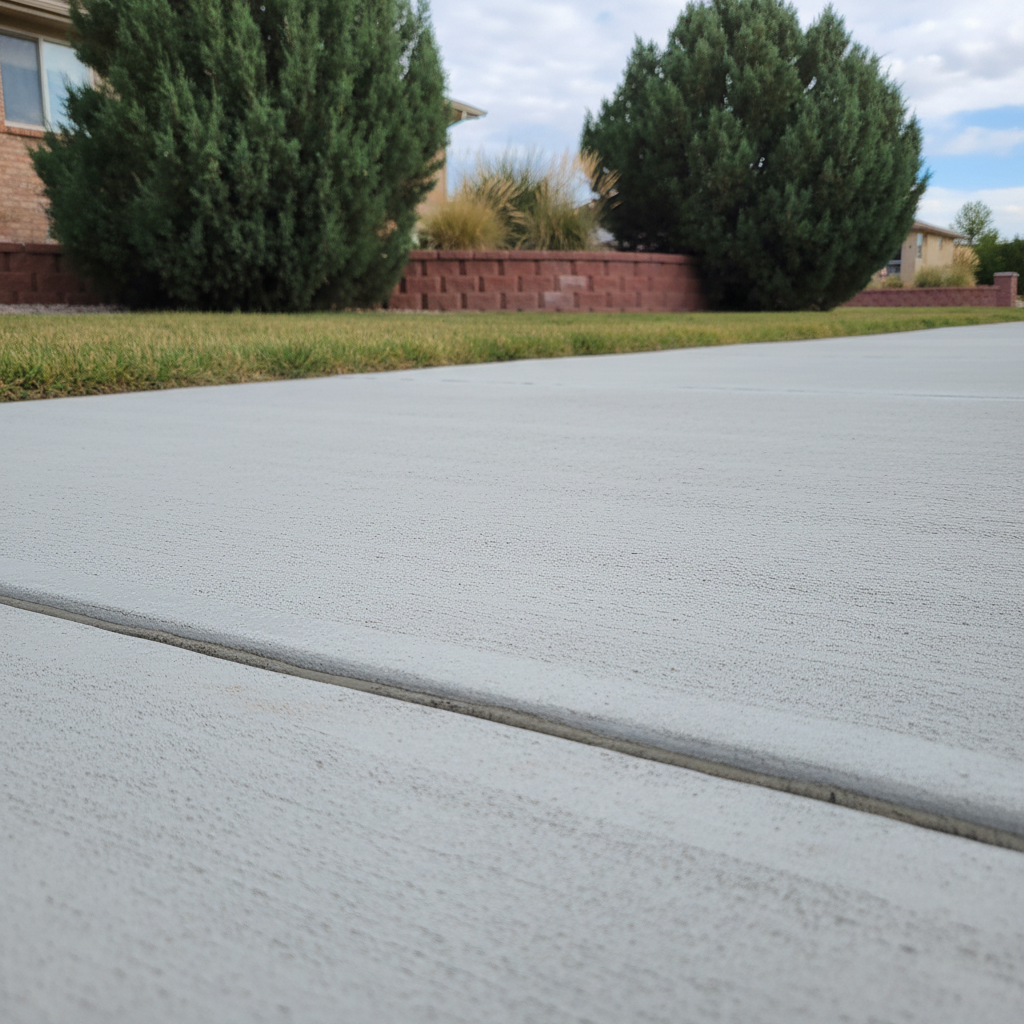
Homeowners in Orem often ask why a concrete sidewalk starts cracking after just a few winters. Between the heavy freeze-thaw cycles and the dense clay soil tucked right up against the Wasatch Range, flatwork takes a lot of stress in this region. Utah Valley Concrete spends a lot of time tearing out failed walkways and replacing them with pours that actually hold up. The most common questions homeowners ask about sidewalk projects involve thickness, soil conditions, and permits.
How deep should a residential concrete sidewalk be poured?
For a standard residential foot-traffic sidewalk, four inches is the industry minimum, and Utah Valley Concrete uses this depth for most standard paths. If you have delivery trucks or heavy mowers crossing over a section of that walkway, our team bumps it up to five or six inches and adds proper reinforcement. Skimping on thickness down to three inches to save money on ready-mix is a fast track to cracked concrete.
Why does Orem soil make sidewalks heave and crack?
Local ground in Orem is full of clay and silt that holds onto moisture. When winter temperatures drop, that trapped water freezes, expands, and pushes the earth upward, which creates pressure points underneath your sidewalk slabs. If the sub-base was not compacted right or lacks crushed gravel for drainage, the concrete cracks under the uneven stress. Utah Valley Concrete always digs down and lays a solid gravel base before setting forms to prevent this movement.
Do I need a permit from the city to replace my sidewalk?
If the sidewalk sits entirely on your private property, such as your front entry walk or a path leading to your backyard, Orem city usually does not require a building permit for minor flatwork replacements. However, if you are touching the public sidewalk right by the street or messing with the curb, gutter, or a utility easement, you will need to check with the city engineering office. Homeowners must also call 811 to locate lines before any shovel hits the dirt.
Can I just mudjack or level my sunken sidewalk instead of replacing it?
Mudjacking or polyurethane foam injection works well if the concrete slab is structurally sound but just settling into loose soil. If the sidewalk is shattered into multiple pieces or crumbling from winter salt damage, lifting it will not fix the underlying material failure. Tear-out and replacement is the smarter long-term option once the concrete starts breaking apart in Orem, UT.
How long do I have to wait before walking on a new sidewalk?
You can usually walk carefully on a fresh broom-finish sidewalk after 24 to 48 hours, depending on current weather conditions. Keep pets, kids, and heavy objects off it for at least a full week. Concrete does not reach its full curing strength for about 28 days, so even if it feels hard to the touch, treat it gently during that first week.
Why do contractors put control joints in sidewalks?
Concrete shrinks as it cures and hardens. Control joints are those grooved lines you see spaced every few feet along a walkway. They dictate where the concrete is going to crack naturally as it moves with temperature shifts. Without those joints, the sidewalk will crack randomly right down the middle, ruining a clean look.